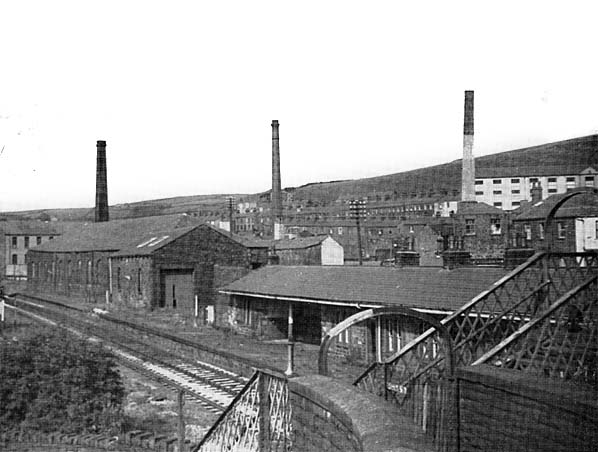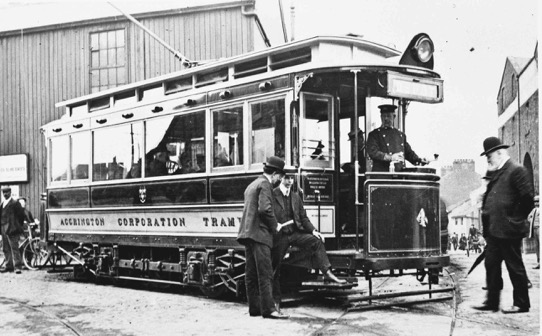
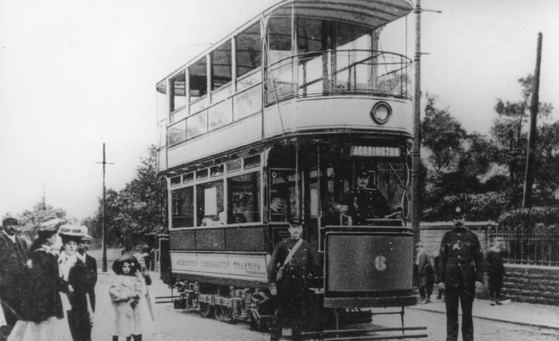
Accrington trams.
Accrington’s tramways shaped the daily life of the town for nearly fifty years. From the hiss of steam engines to the hum of electric motors, Accrington trams connected mills, markets, and neighbouring communities, leaving a transport legacy still visible today
Steam on the Streets (1886–1907)
Accrington entered the tram age on 5 April 1886, when the Accrington Corporation Steam Tramways Company launched its first services. Steam locomotives built by Thomas Green & Son hauled passenger trailers along routes linking Accrington with Church, Clayton‑le‑Moors, Baxenden, Haslingden, and Rawtenstall.
The steam era was lively and occasionally unpredictable. The steep gradients of Manchester Road challenged the small engines, sometimes forcing passengers to step off—or even help push. Despite these quirks, the system expanded steadily and became a defining feature of local street life

Accrington trams, the Electric Revolution (1907–1932)
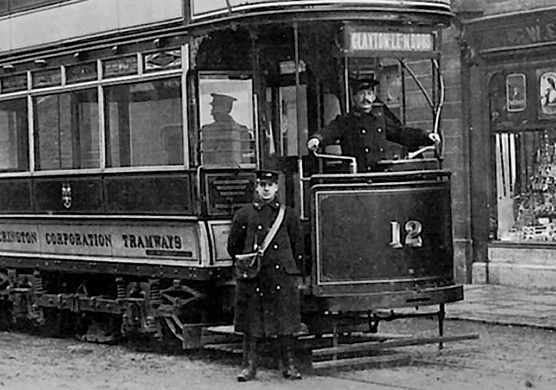
Accrington Corporation purchased the steam system in 1907, immediately beginning electrification. The first electric tram ran on 2 August 1907, ushering in a cleaner, faster, and more reliable era.
Electric trams built by Brush of Loughborough operated in a distinctive red and cream livery. Routes extended to Oswaldtwistle, Clayton‑le‑Moors, Huncoat Cemetery, Baxenden, Haslingden, and Lockgate, where they connected with Rawtenstall Corporation Tramways.
Electric trams transformed daily travel. They carried workers to mills, families to markets, and crowds to Accrington’s busy town centre, becoming a familiar part of the borough’s rhythm.
Decline and Closure
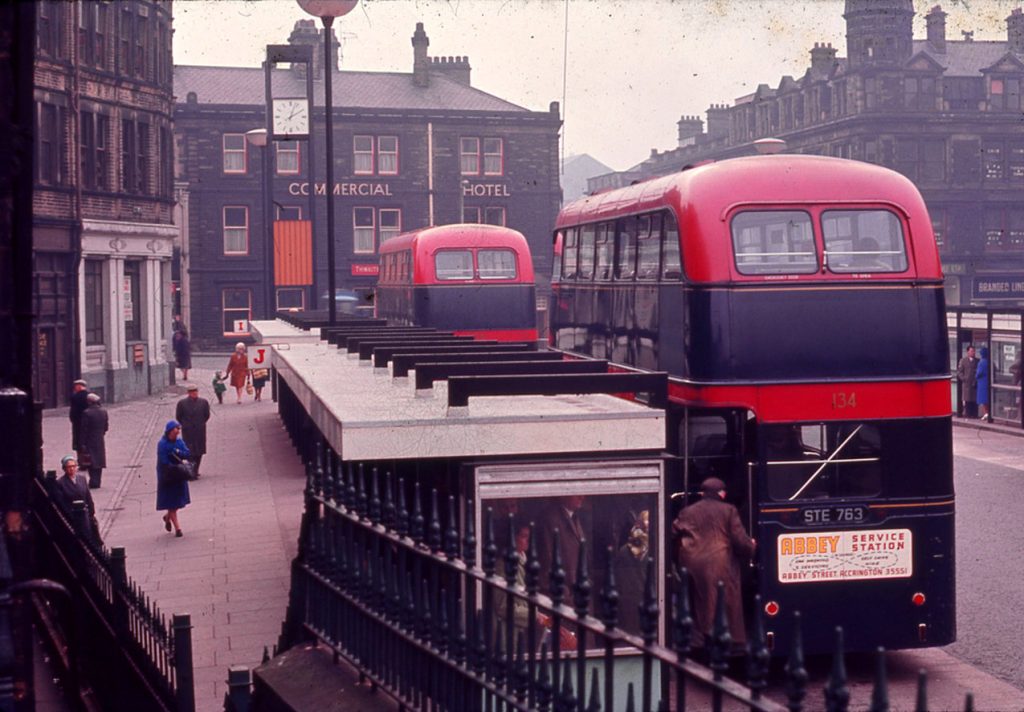
By the late 1920s, buses offered greater flexibility and lower operating costs. Tram routes were gradually withdrawn:
- 1930: Rawtenstall line
- 1931: Clayton‑le‑Moors & Oswaldtwistle
- 6 January 1932: Final tram to Huncoat Cemetery
After 46 years, the tram era came to an end.
Legacy of the Tramway Era
Although the tracks have long vanished, the tramway’s influence remains:
- Former tram routes became major bus corridors.
- The red‑and‑cream tram livery may have influenced later Accrington bus colours.
- Historic photographs preserve scenes of trams navigating Market Place, Manchester Road, and the steep climbs to Baxenden.
- The tram era reflects Accrington’s industrial confidence during the height of the cotton and engineering industries.
Discover more from The Lancashire History Blog
Subscribe to get the latest posts sent to your email.