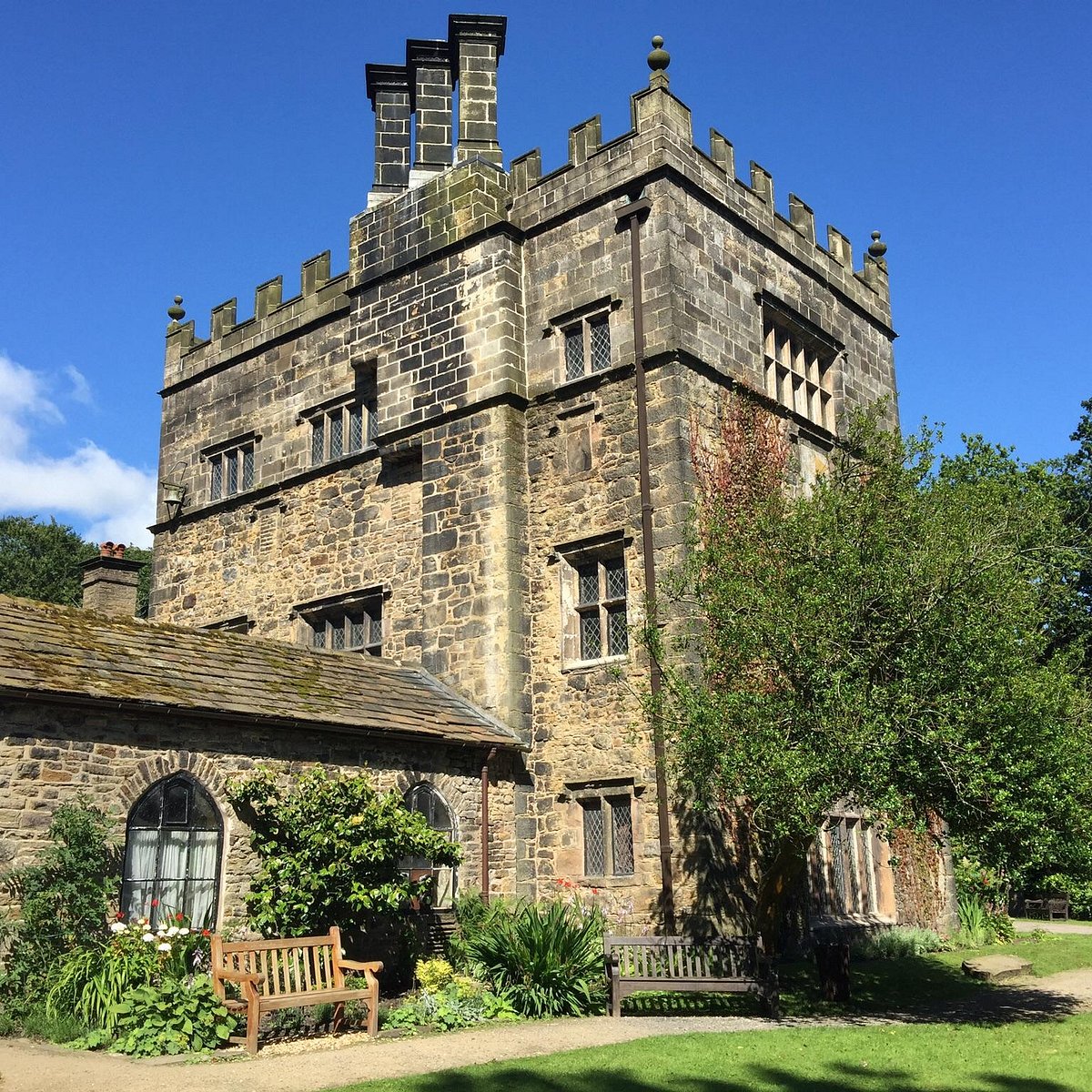
Turton Tower is one of Lancashire’s most distinctive historic houses — a rare survival of a medieval pele tower that evolved over five centuries into a Tudor manor, a Victorian gentleman’s residence, and finally a public museum. Its story reflects shifting patterns of defence, domestic comfort, local power, and heritage preservation.
Origins and Early Lords (Pre‑1420)
The Turton district shows evidence of pre‑Christian settlement on Turton Moor, with early habitation near Torra Barn. By 1212, the de Torboc family held the Manor of Turton under the Lord of Manchester, maintaining control for more than two centuries.
Although the exact origins of the first fortification are debated, the site’s elevated position — 600 feet above sea level on the edge of the West Pennine Moors — made it ideal for defence. William Camden later described the location as “amongst precipices and wastes”, emphasising its strategic isolation.
The Medieval Pele Tower (1420s–1500s)
Turton Tower as a recognisable building began in the early 15th century, when the Orrell family acquired the manor through the 1431 marriage of Elizabeth de Torboc to William Orrell. The Orrells constructed a stone pele tower, a compact defensive structure typical of northern England.
Architecture of the Original Tower
- Three storeys with 1.2‑metre‑thick sandstone walls
- Narrow defensive windows
- A projecting garderobe shaft in the northwest corner
- Rough rubble masonry with large corner quoins
The tower’s purpose may have been as much about protecting the Orrells from local rivals as from Scottish raiders — a point suggested by later historical interpretation.
Tudor Expansion (1533–1596)
In 1533, Ralph Orrell began transforming the stark medieval tower into a more comfortable residence. Two cruck‑framed wings were added at right angles to the stone tower, increasing living space while retaining the defensive core.
By 1596, the tower underwent major rebuilding:
- Raised to its present height (approx. 45 ft)
- Addition of large mullioned and transomed windows
- Installation of a new ashlar upper storey
- Blocking of narrow medieval windows
These changes marked Turton Tower’s transition from fortress to Tudor manor house.
Civil War and Chetham Ownership (1628–18th Century)
Financial difficulties forced the Orrells to sell the estate in 1628 to Humphrey Chetham, the Manchester merchant and founder of Chetham’s Library. The Orrells remained as tenants until 1647.
During the English Civil War (1642–1651):
- The Orrells supported the Royalists
- Chetham backed Parliament
- Parliamentary troops were garrisoned in Turton barn
The Chetham estate later passed to the Greene and Frere families, who often rented the house to tenants, including the Horrocks family. Over time, the building declined into partial disrepair.
Victorian Restoration (1835–1903)
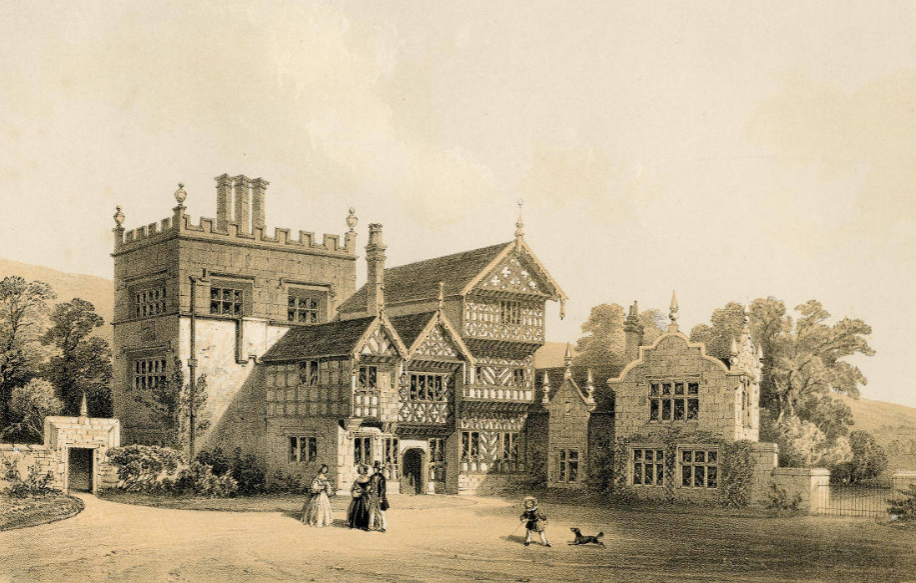
Industrialist James Kay purchased Turton Tower in 1835, initiating extensive restoration and remodelling. His work aimed to create an idealised neo‑Tudor residence:
- Stone cladding of earlier timber structures
- Addition of a floor above the first cruck-framed wing
- Introduction of Victorian comforts and decorative features
After Kay’s death, the house passed to Anne and Elizabeth Appleton, and later to Sir James Lees Knowles, MP for Salford West, who used it as a weekend retreat.
Public Ownership and Museum Era (1928–Present)
Following Sir James’s death in 1928, his widow Lady Nina Knowles gifted Turton Tower to Turton Urban District Council “for the benefit of the people of Turton.”
Key developments:
- 1952: Opened as a public museum
- 1974: Local government reorganisation placed the tower under Blackburn with Darwen
- Ongoing conservation ensures preservation of medieval, Tudor, Stuart, and Victorian features
Today, Turton Tower stands as a Grade I listed building and scheduled ancient monument, offering visitors a rare architectural timeline from the 1420s to the 19th century.
Significance
Turton Tower is historically important because it:
- Preserves a complete late‑medieval pele tower
- Demonstrates Tudor domestic expansion
- Reflects Civil War loyalties and local political tensions
- Showcases Victorian restoration philosophy
- Serves as a public heritage site representing centuries of Lancashire social history
Discover more from The Lancashire History Blog
Subscribe to get the latest posts sent to your email.