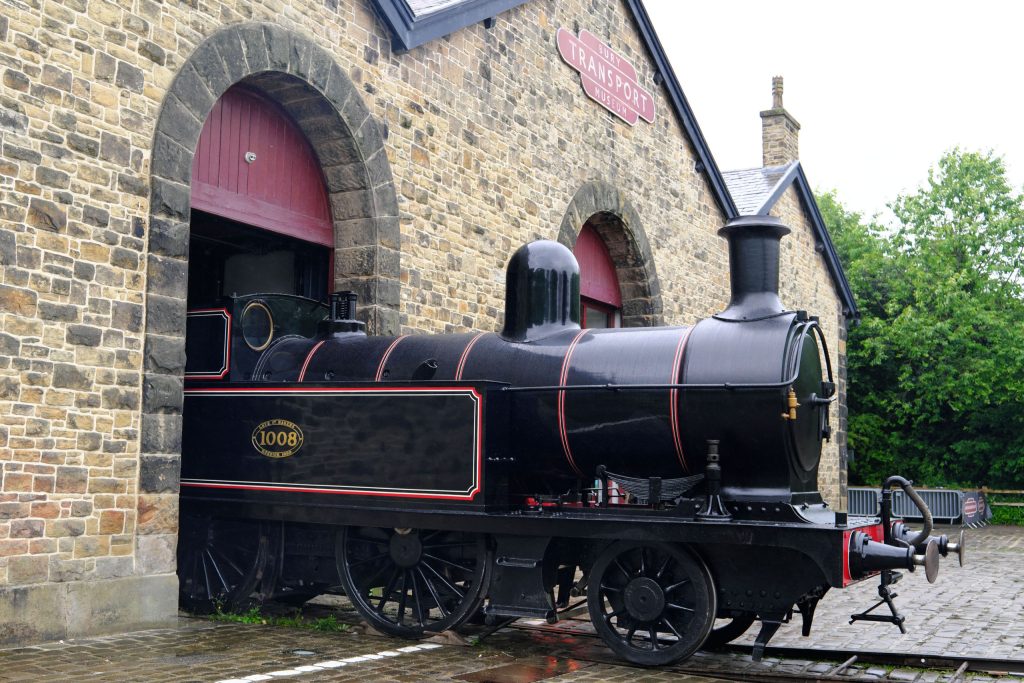
Origins: Railways for an Industrial County (1830s–1840s)
The East Lancashire Railway story begins amid Lancashire’s explosive industrial growth. Cotton mills, collieries and engineering works demanded faster transport than canals could provide. Early schemes such as the Manchester, Bolton and Bury Canal & Railway Acts of 1831–32 attempted to link Bury with Manchester, but engineering challenges stalled progress.
By 1843, Bury industrialists met to propose a new line—the Manchester, Bury and Rossendale Railway (MB&RR)—to connect Bury with Clifton and Rawtenstall. Their plan outcompeted a rival Manchester & Leeds Railway proposal.
The East Lancashire Railway Company (1844–1859)
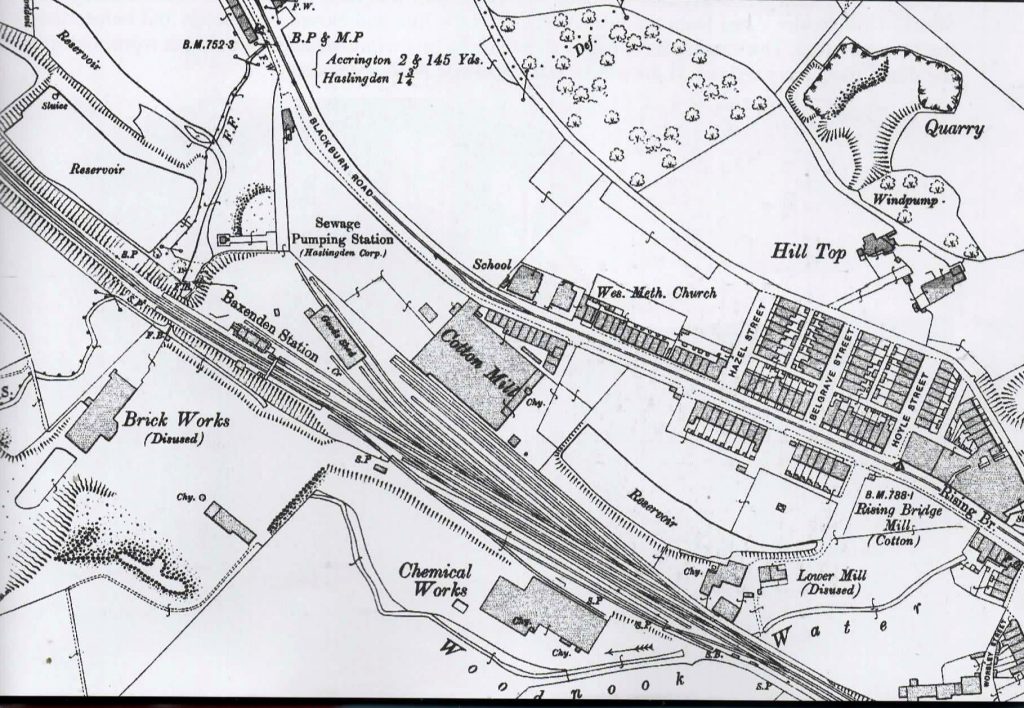
The MB&RR was soon absorbed into a larger vision. The East Lancashire Railway Act of 1844 authorised a major new route from Clifton Hall Junction through Bury to Rawtenstall, serving the Irwell Valley’s mills and coal pits.
Rapid Expansion
Between 1846 and 1859, the ELR expanded aggressively, acquiring lines to Blackburn, Preston, Burnley, Salford, and even reaching Liverpool. This created a dense network supporting Lancashire’s textile economy.
Competition and Merger
The ELR clashed with rivals such as the North Union Railway and the Lancashire & Yorkshire Railway (L&YR), culminating in a notable 1849 standoff. After years of negotiations, the ELR was amalgamated into the L&YR in 1859, ending its brief independent life.
Under the L&YR, LMS and British Rail (1859–1972)
Once absorbed, the ELR’s routes became part of the L&YR’s extensive network, later passing to the London, Midland & Scottish Railway (LMS) in 1923 and British Railways after nationalisation in 1948.
The line through the Irwell Valley remained vital for workers travelling between Heywood, Bury, Ramsbottom, Irwell Vale, Rawtenstall, and Bacup.
Decline
By the 1950s–60s, rising road transport and the Beeching Report triggered widespread closures. Passenger services between Bury and Rawtenstall were withdrawn in 1972, and coal traffic ended in 1980, after which the line formally closed.
Preservation: The Fight to Save the Line (1970s–1980s)
As closure loomed, enthusiasts formed the East Lancashire Railway Preservation Society in 1968, aiming to save the Bury–Bacup route. They gathered rolling stock at Castlecroft Yard and negotiated with British Rail and local councils.
By the early 1980s, the last freight trains had run, and the track lay silent. The ELR Trust was eventually formed, securing control of surviving infrastructure.
Rebirth as a Heritage Railway (1987–Present)
The preserved ELR reopened in stages:
- 25 July 1987 — Bury → Ramsbottom section reopened.
- 1991 — Extension to Rawtenstall via Irwell Vale.
- 2003 — Eastward extension to Heywood, crossing the Metrolink line.
Today the ELR operates 12½ miles of standard‑gauge heritage railway between Heywood and Rawtenstall, with stations at Bury Bolton Street, Burrs Country Park, Summerseat, Ramsbottom, Irwell Vale, and Rawtenstall.
It welcomes around 200,000 visitors annually, supported by roughly 800 volunteers, and regularly hosts famous locomotives such as the Flying Scotsman.
Why the ELR Matters
The East Lancashire Railway preserves the following:
- A living piece of Lancashire’s industrial heritage
- Victorian engineering across the Irwell Valley
- Historic stations and architecture at Bury, Ramsbottom and Rawtenstall
- A working fleet of steam and diesel locomotives
- A rare heritage line connected to a major urban centre (Bury)
It stands today as one of Britain’s most successful preserved railways—an industrial lifeline reborn as a cultural treasure.
What you might explore next: coming soon
- ELR steam fleet
- ELR diesel fleet
- Route maps
- ELR station histories
Discover more from The Lancashire History Blog
Subscribe to get the latest posts sent to your email.