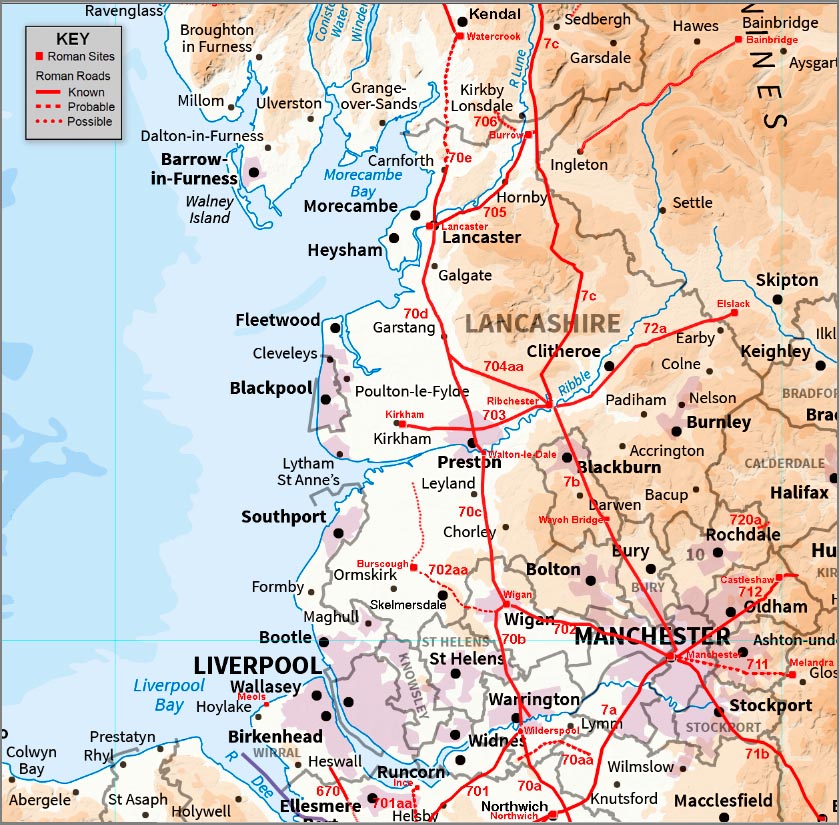
The Romans in the Preston area formed one of the most important industrial and logistical hubs in Roman North‑West Britain. The centre of activity was the Walton‑Le‑Dale supply depot, supported by nearby forts at Ribchester and Kirkham and connected by a network of Roman roads that crossed the Ribble at strategic points.
The Roman presence around Preston
Walton‑le‑Dale — industrial settlement & supply depot
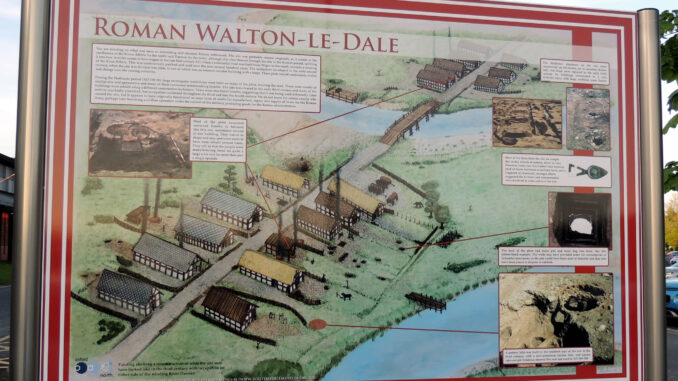
Archaeology shows Walton‑le‑Dale, just south of the Ribble, was a major industrial settlement supplying the Roman military. Excavations in the 1980s and 1990s uncovered:
- Large timber buildings with industrial hearths (late 1st–early 2nd century).
- A grid‑like street layout resembling a military camp interior.
- Workshops producing military equipment, metal goods, and later coarseware pottery fired around AD 285.
- A shift from manufacturing to warehousing and storage in the late Antonine period.
The site sat between the Ribble and Darwen, naturally defended and positioned beside a key river crossing — ideal for supplying troops on the northern frontier.
Ribchester (Bremetenacum)
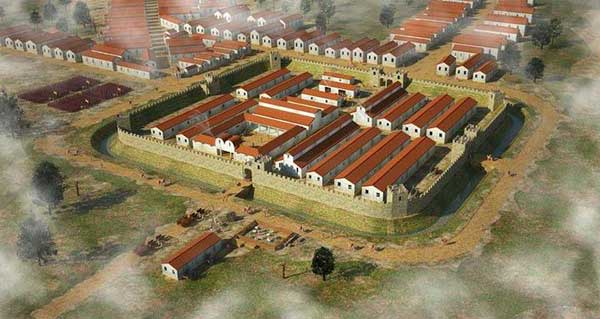
A major cavalry fort east of Preston, Ribchester controlled movement along the Ribble Valley. Its granaries, still visible today, show advanced Roman food‑storage methods.
Kirkham
A smaller fort to the west, guarding the coastal plain and linking Preston to the Fylde and the road network heading toward the Wirral and Chester.
Roman roads around Preston
Archaeologists have mapped Preston’s Roman roads with increasing accuracy using lidar. Key routes included:
- The Wigan–Lancaster road, passing through modern Preston and crossing the Ribble near Walton‑le‑Dale.
- An east–west road through Fulwood linking Ribchester and Kirkham.
- A newly confirmed 17 km “lost” road from Ribchester to Lancaster (Margary 704aa).
These roads formed a strategic crossroads north of Preston at Sharoe Green, connecting industrial production at Walton‑le‑Dale with forts across Lancashire.
Daily life in Roman Preston
Industry
Walton‑le‑Dale was dominated by smithies, metalworking forges, and workshops producing knives, blades, and military hardware. Evidence suggests local Britons worked under Roman supervision.
Food
- Grain stored in raised, ventilated granaries (examples at Ribchester).
- Seasonal local produce: fish from the Ribble, hedgerow fruit.
- Wine imported for wealthier households; poorer people drank well water.
Dress
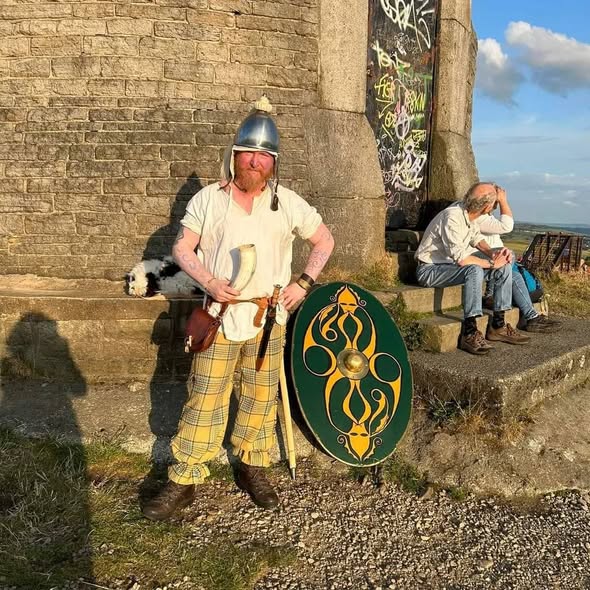
Frontier civilians often wore native trousers under Roman cloaks — practical for Lancashire’s climate. Women wore stolae over tunics.
Why Preston mattered to the Romans
Preston’s landscape — river crossings, defensible banks, and proximity to Ribchester — made it a perfect logistical hub. Walton‑le‑Dale supplied the northern frontier during the Hadrianic and Antonine periods, acting as a military factory, warehouse complex, and transport node linking roads, rivers, and forts.
Discover more from The Lancashire History Blog
Subscribe to get the latest posts sent to your email.